
One way of introducing the customer to these objects of desire is through the use of lighting. The designer needs to suggest t o the customers that this is the store that they have all been looking for. The lighting design must make the objects of desire even more desirable.
 There is considerable research about how people behave while shopping. For example, some of these who study shopping movement patterns have suggested that faced with alternative pathways into a large store interior, most customers will choose to turn light, rather than go left or straight on. Color theorists also have views about how combinations of color reflect different personalities, and that these combinations should be selected as appropriate to the target consumer group.
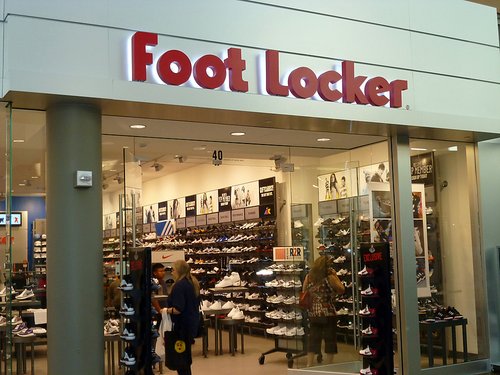
If the shop window provides a first opportunity to draw the customer’s attention, then the entrance is the second step in closing the encounter with the customer: the gateway to the goods on display. The degree of attention the customer is shown or experts is partly a matter of cultural convention (lift attendants, for example, have virtually disappeared from department stores in Europe, but no respectable Japanese store would be complete without its host of welcomers to greet clients). The nature of the products offered also affects how the customer is met: one expects personal service in exclusive jewelry shop but not in a push-your-own-trolley supermarket! This requirement has an impact, in turn, on the lighting requirements for the entrance space which needs to lead seamlessly into the main display area or areas.
Thus, the lighting designer needs to conceive of the total lighting solution for the shop as a complete system: the emphasis may differ at different points, particularly in a store selling different ranges of goods over a large floor area or several floors, and if, as is so often the case today in large stores, there are in-store concession sites for particular manufacturer’s products. On a large site, these choices can have important consequences for lighting maintenance: one major London department store as a matter of policy only uses eight different lamps, though in a wide range of fittings, so reducing storage space for spare lamps and the risk of incorrect relamping. These practical considerations, as well as questions such as the accessibility of fittings, heat dispersal and so forth; all need to form part of the lighting plan.
Getting the ambience right for the intended customers is a major part of the overall marketing strategy of the shop, and it is the lighting designer’s task to find the correct solution to meet this requirement. In some cases, the demand will be for a bright and engaging, busy and cheerful approach, or alternatively, for something discreet and cool, or for color and activity. The solution adopted will not only have to work at the entrance to the shop, but can also be a valuable reinforcement of the strategic marketing approach in intermediate areas such as stairways and escalators. The treatment of these elements, and other architectural features, can help focus customer attention on the central retail experience.
Color plays an important role in shop interior design. It can be used to set the mood, as well as to mark the difference between sections of the shop. The selection of colors needs to be made with the intended merchandise in mind, and the lighting designer should be consulted early in this process as the choice of colors can relate to the suitability of different lamps. For example, metal halide lamps, which have a relatively high color temperature, are better for lighting dark colors, such as blues and greens, while LED lamps, give god color resolution for softer colors such as reds and yellows. Since both display colors and merchandise colors in a shop are likely to change with time and fashion, it is a good principle to provide for as wide a range of alternatives as the lighting budget will allow. This can be done, for example, by specifying multiple circuit track, rather than single circuit, by choosing spotlights that can be redirected easily, either on track or from fixed positions, and by selecting fittings that can be fitted with different lamps to provide different color renderings. Many lamp manufactures are now producing lamps (such as low-voltage compact fluorescents with integral transformers) that can be retrofitted into standard mains fittings.
Staircases offer an opportunity for both architectural and lighting design flair. The change of level and pace offers the customer a new vantage point from the staircase, both visually and mentally. A series of steps can also draw the customer to explore the store, as at the Kenzo shop in London. Spotlights are used to highlight the steel and glass staircase at Bergdorf Goodman in New York, designed by Eva Jiricna, and central downlighters create a white cage at the Ted Lepidus store in Caracas, designed in the late 1960s – good classical design does not date.
Escalator can be both a transport necessity and a visual horror. A necessity, in that they need to be well lit for safety reasons and to clarify a position in the shop. Horrors, as the materials from which they are constructed are often highly reflective. But an enterprising designer can turn these features into something positive, either by using colored or pinpoint lighting, or by using precise reflections from moving parts to animate the setting. In the same way that an entrance can be lit so as to invite the customer in, a functional transport system can be used to keep the customer’s interest, maintaining the level of curiosity about the goods yet to be seen.
